What You Are Actually Paying for on Shoot Day
Booking a shoot can look simple on paper. A date is locked, a crew is booked, a location is confirmed, and everyone assumes ideas, strategy, and scroll-stopping content will just appear. Then shoot day hits, questions start flying about scripts, framing, wardrobe, and it becomes obvious: not all of that was actually included.
This is the gap between creative direction services and production. One owns the idea and how it should feel. The other runs the machine that captures it. When that gap is not clear, brands get slow decisions on set, a confused crew, and content that looks fine but does not feel like the brand.
Right now, brands need lots of content across socials, campaigns, and video. Clear roles mean faster, sharper calls on set, less “we should have shot that” in post, and fewer reshoots when something feels off.
This article unpacks what creative direction services actually are, what production covers (and what it does not), and who owns the final call on set, so you can book a shoot without chaos.
What Creative Direction Services Actually Do
Creative direction is the brain of the shoot. It turns brand strategy into something that can be seen, heard, and felt on screen. It is not just “making it pretty”. It is deciding what story is being told and how.
Effective creative direction services usually cover translating brand strategy into visuals (tone, colour, framing, pace, energy), building the world of the campaign (concepts, storylines, visual language), deciding how the brand feels (humour, warmth, tension, minimal, bold, or playful), and guiding casting, wardrobe, styling, and locations, so they all feel like the same brand.
The outputs are concrete, not vague vibes. Typically, these include:
- A creative treatment: mood, references, sample frames, and clear do/don’ts
- Shot or scene priorities: what absolutely must be captured, and what is extra
- Direction notes: how talent should play moments, how social edits should land
Creative direction is especially worth investing in when:
- A brand is launching or refreshing and the visual language is still loose
- A multi-channel campaign runs across film, photography, animation, and social
- The goal is content that stands out in feed instead of feeling like a generic template
Without this layer, a crew can still shoot beautifully, but they are guessing how the brand should feel. That guesswork is risky.
Production Is the Engine, Not the Vision
Production is the engine that makes the idea real. It is practical, organised, and focused on getting things done safely and on time. It is not there to rewrite brand strategy on the day.
Production usually looks after logistics (schedules, call sheets, equipment, locations, permits, catering), resourcing (director, DOP, gaffer, sound, hair and makeup, runners, editor), and managing the day (timings, safety, transport, problem-solving).
Production deliverables often include:
- Footage or stills captured as scoped, in agreed formats and resolutions
- Well-labelled files ready for edit or an internal team
- On-set fixes for how to get a shot working in the real world
Here is what production does not normally own. It typically does not own brand positioning or which message leads a scene. It also does not own big visual identity calls like “is this on-brand” or “should this feel younger or more premium”, or channel-specific strategy like what should be shot vertically for Instagram Reels versus wider for TV.
If only production is booked, the spend mostly covers the shoot running well. It does not automatically include the idea, the world, or the brand brain.
Who Actually Calls the Shots on Set
When Roles Are Clear, the Chain of Decisions on Set Is Simple
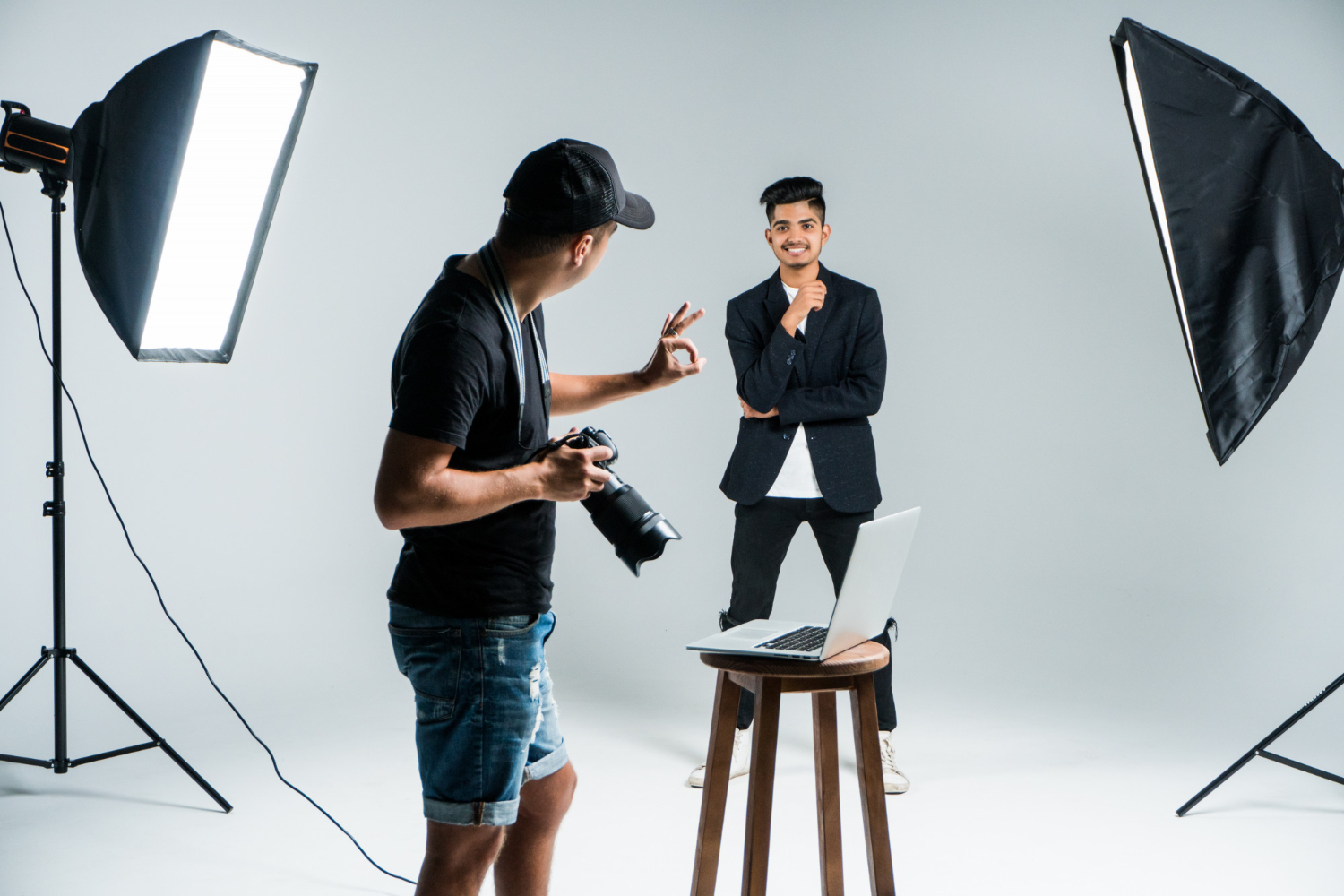
On a well-run set, the roles are clear: the creative director owns the vision and approves frames, tone, performance, and overall feel; the director and DOP turn that vision into angles, blocking, camera moves, and lighting; and the producer protects time, budget, and practicality, while keeping the day moving.
With that structure in place, questions flow up to the right person. Performance and tone questions go to the creative director, technical and timing questions go to the producer and DOP, and calls about cutting or reshaping scenes are made between the creative director and producer.
When creative direction services are missing, chaos creeps in. The client, producer, director, and brand manager all give different notes, scenes get tweaked mid-shoot (breaking continuity and diluting the core idea), and crew waste time testing ideas that should have been locked before sunrise.
Tiny Disco recommends clear ground rules to avoid that mess:
- One clear creative lead who has final say on visuals and tone
- Pre-approved treatments and references printed or open on set
- A critical shot list that everyone agrees is non-negotiable when the clock is ticking
If nobody can confidently say “yes, that is the shot” until everyone packs up, the project is undercooked.
How to Scope a Shoot Without Buying a Headache
A smoother shoot starts long before the camera rolls. The scope and proposal need to be clear on where creative direction services stop and production starts.
Tiny Disco Suggests Asking Smart Questions Before Anything Is Signed:
- Who is providing creative direction services and what are the actual deliverables?
- Who has final say on visuals, performance, and pace on set?
- If there is a disagreement on the day, how are decisions made?
Key points to clarify in writing include whether creative concepting is included (or a locked idea is expected), whether brand guidelines alone are enough (or a full creative treatment will be created), and which formats are planned, vertical, horizontal, stills, cutdowns, and social-first versions.
Red flags that things are not ready yet:
- No pre-production workshop or detailed briefing
- No written creative treatment, just “we will find it on the day”
- Lots of chat about “content” but no clear picture of what success looks like for the brand
A healthy process will instead:
- Start with audience, message, channel mix, and timing
- Lock creative direction before anyone quotes gear lists
- Build production around that vision, not the other way around
Making Creative and Production Play Nicely
When creative direction and production are treated as a team, everything speeds up. Decisions get easier, content stays on-brand, and a shoot day delivers more real value.
A tight pre-production rhythm usually includes:
- One shared document for vision, messaging, and asset list
- Social and brand stakeholders in the room before the shoot, not on the third take
- Locked treatments, references, and shot priorities that production can build around
This matters even more on mixed media campaigns where film, photography, animation, and social all have to feel related. The same core idea can sit on a billboard, a Reel, and a product page, but only if someone holds that thread from start to finish.
In busy seasons, when Mother’s Day ideas stack on EOFY prep and winter launches, there is no time to fix the idea later. The real shoot is pre-production. Shoot day is just pressing record on decisions already made.
Ready to Stop Guessing and Start Directing
The key difference to hold onto is simple:
- Creative direction decides what the story is and how it should feel
- Production makes that story happen safely and smoothly
Both matter, but they are not the same line in a budget, and they do not come with the same responsibilities on set.
For the next campaign Tiny Disco recommends:
- Asking for creative direction services by name
- Deciding who owns visual decisions before anyone steps onto set
- Treating pre-production as the place where clarity starts and chaos is removed
Automatic. Boring. Generic. We ain’t it. Tiny Disco. Redefining authentic campaign creative in 2026.
Get Started With Your Project Today
If you are ready to sharpen your brand story and visuals, Tiny Disco is here to help shape a clear creative direction that actually reflects who you are. Explore our recent work and see how our creative direction services bring ideas to life across campaigns, content and visual identities. When you are ready to chat about your own project, simply contact us and we will work with you to plan the next steps.