Stop Torching Budget on Half-Baked Story Ideas
Brands keep sending wobbly social concepts straight into production, then act shocked when the results flop. The deck looks pretty, the team argues about vibes, but nobody checks if the story works as a fast, visual, thumb-stopping piece.
This is the core miss: teams debate language and mood, but they do not map the actual sequence of moments a person will see and feel in feed. That sequence is the story. If that story is soft, no amount of spend, targeting or clever captions will save it.
Tiny Disco treats story as the fixed asset and spend as the flexible dial. Tiny Disco recommends locking the story early, then letting placements, edits and lengths flex around that story. The quickest way to do this is a 60-minute storyboard sprint that stress-tests ideas before media sign-off.
By the end of this article, any brand or social media campaign agency can:
• Use a simple worksheet to test story strength.
• Run a repeatable sprint process.
• Pressure-test the story, not just the strategy deck, before money locks in.
Problem: Production starts while the story is still fuzzy. Cause: Teams argue about tone, not frames. Fix: A fast, ugly, 60-minute storyboard sprint. Tool: A one-page worksheet anyone can run.
Why Storyboard Sprints Beat Endless Decks
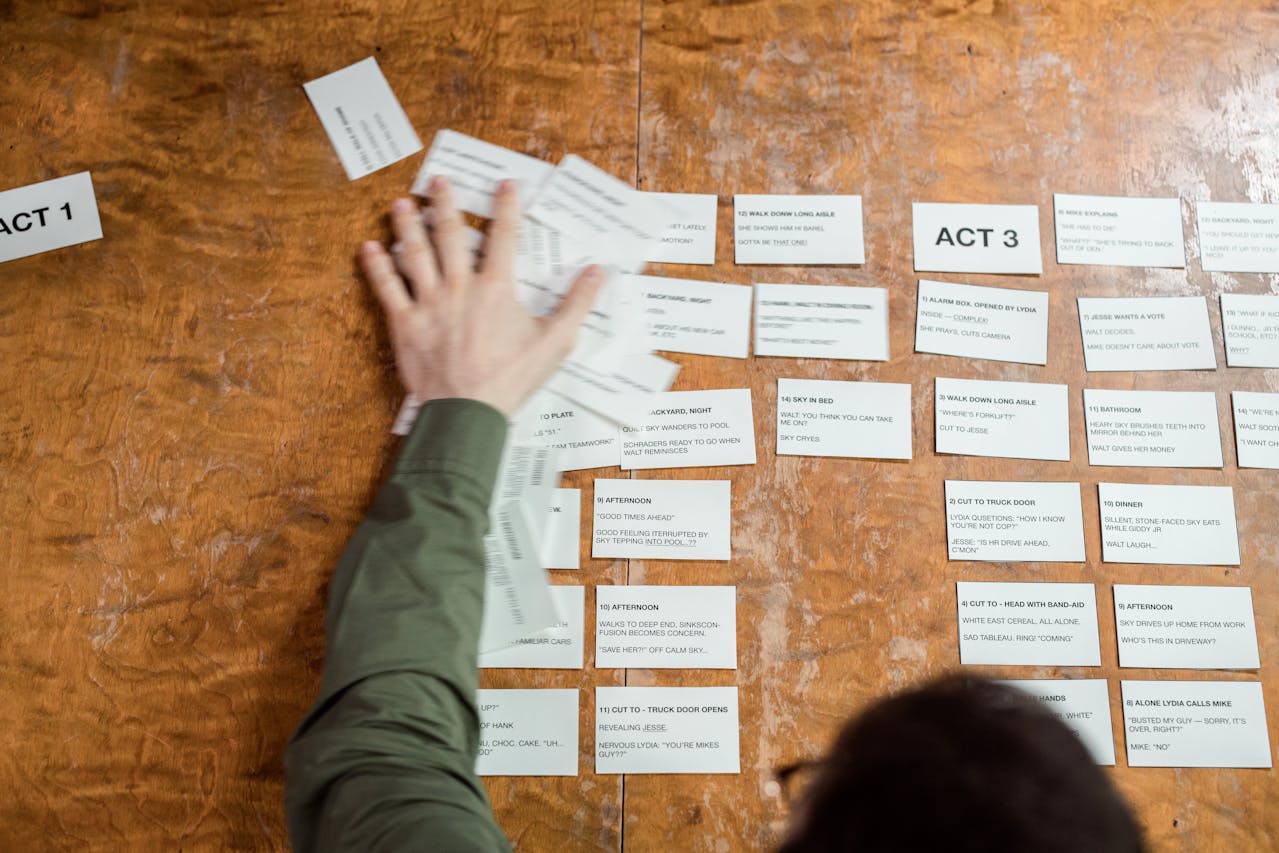
A storyboard sprint forces everyone to drop abstractions and think in shots. In one hour, a team can see the whole story from hook to payoff. There is no hiding behind paragraphs and overlong decks.
Two common paths show the gap between decks and storyboards:
Deck-first teams:
• Spend weeks polishing 40 pages of strategy.
• Talk about territories, pillars and RTBs.
• Still cannot describe what happens in the first 3 seconds of the ad.
Story-first teams:
• Grab pens and sketch 6 to 9 frames.
• Test emotional beats, pacing and reveals.
• Align quickly on what the ad will actually look and feel like.
For a social media campaign agency, this gap matters because social is brutal and visual and audiences scroll fast. Storyboards expose:
• Dead frames where nothing happens.
• Confusing shifts in idea or tone.
• Hooks that are too slow for Reels, Stories, TikTok or Shorts.
Tiny Disco recommends time-boxing the sprint to 60 minutes. The clock forces:
• Bold, simple thinking instead of bland safety.
• Hard decisions on what stays and what gets cut.
• Less word-polishing, more scene clarity.
In busy periods like late summer and early in the year, budgets are about to lock. A fast storyboard sprint beats another round of comments on a bloated deck every time.
Lock the Story, Flex the Spend
“Lock the Story, Not the Spend” is a simple mindset shift Tiny Disco backs.
Story includes
• The hero arc.
• The tension or problem.
• The turning point.
• The payoff and brand moment.
Spend includes
• How many edits and cutdowns run.
• Which channels get which version.
• How many formats share that same story.
Most teams flip this. They lock the media plan first, then squeeze story into leftover placements. They approve three or four “maybe” concepts instead of one strong, stress-tested narrative. They add more formats to feel “safe” instead of sharpening a single, memorable idea.
Tiny Disco recommends treating the storyboard as the single source of truth before any media negotiation. With the board in front of the team, the right questions are:
• What are the one or two moments that truly deserve money?
• Where does the hook land best, vertical or horizontal?
• Which frames are must-have, and which are nice-to-have extras?
For a social media campaign agency, one locked story can:
• Flex into Reels, Stories, TikTok and YouTube Shorts.
• Keep a consistent narrative while tailoring duration, captions and sound.
• Reduce chaos, confusion and last-minute script rewrites across partners.
The aim is not to fill placements. The aim is to scale a clear story.
The 60-Minute Storyboard Sprint Step-by-Step
Treat the sprint as a ritual, not a panic move. Same time, same format, every big social idea.
Ideal room mix:
• A creative with visual instincts.
• A strategist who loves sharp problem statements.
• A producer who knows what is actually shootable.
• One person whose only job is to ask “So what?” every five minutes.
Sprint blocks Tiny Disco recommends:
• 0-10 minutes: Clarify problem and audience
• Write one sentence for the audience: Who is this actually for?
• Write one sentence for the problem: What pain or desire is this solving?
• Write one single-minded message: If they remember one line, what is it?
10-25 minutes: Rough concept dump
• Brain-dump three to five loose ideas on paper.
• No polishing, no filtering, ugly sketches only.
• Each idea must fit into one simple story sentence.
25-45 minutes: Pick the hero and sketch 6 to 9 frames
• Choose one concept, not two.
• Draw 6 to 9 frames that show the full story, from hook to brand moment.
• Label each frame with three to seven words, maximum.
45-55 minutes: Stress-test
• Where is the tension?
• Is the hook in the first frame or the second?
• Is the payoff clear without sound?
• Does it still work as a 6-second cutdown?
55-60 minutes: Decide
• Send the concept to production shaping, or
• Kill it and pick another concept for the next sprint.
Drawing quality does not matter. Tiny Disco recommends stick figures over silence. Clarity beats craft early in the process.
February, when many brands lock pre-autumn campaigns, is a strong moment to make this sprint non-negotiable. That habit prevents reshoots from blowing up later schedules.
The Simple Storyboard Sprint Worksheet Template
Tiny Disco uses a clean one-page board to keep thinking sharp. This structure can be copied and taped to any wall.
Top section: Campaign Snapshot
• Audience: [One line].
• Problem: [One line].
• Single-Minded Message: [One sharp line].
Middle section: Story Frames (6 to 9 boxes)
• Frame 1: Scroll-stopping hook.
• Frame 2-3: Real-life tension or problem.
• Frame 4-5: Product, service or idea enters.
• Frame 6-7: Transformation or payoff.
• Frame 8-9: Call to action and brand cue.
Bottom section: Stress-Test Checklist
• Would someone stop scrolling at Frame 1?
• Does each frame earn its place, or is any frame just filler?
• Could this run across three or more social placements without confusion?
• Is the story still clear with sound off?
A social media campaign agency can use this worksheet in a few practical ways: as a pre-brief filter before sending anything to production partners, as a client workshop tool to quickly kill weak concepts and protect the budget, and as a shared visual reference so media, creative and production argue less and align more.
For imagery, Tiny Disco avoids generic stock and recommends sticking to real campaign work. If nothing fits, use this placeholder:
How to Read and Stress-Test Your Storyboard Like a Pro
Once the board exists, the real work starts. Tiny Disco reviews storyboards through three lenses:
Clarity:
• Can a stranger explain the story in one sentence after one read-through?
• Is the single-minded message obvious from the frames alone?
• Could someone guess the brand category by Frame 3?
Emotion:
• Does at least one frame make a person feel something, not just receive information?
• Is the tension specific, not just “life is busy”?
• Does the payoff feel like relief, pride, joy, curiosity or another real emotion?
Distinctiveness
• Could any competitor in the category run this exact story?
• Is there one visual device that feels ownable, such as colour, framing or a motion idea?
Then check pacing:
• Does something interesting happen in the first two seconds?
• Is there at least one small surprise or twist before the payoff?
• Does the ending feel earned, not just a logo slapped on a random frame?
Production realism matters too, especially for busy Melbourne shoots where time and sunlight are limited. Check:
• Can this be shot or animated with available time and resources?
• Are there any nightmare shots, like huge locations or crowds, that will wreck the schedule?
Tweaks should stay small and fast:
• Swap one frame to sharpen the tension.
• Combine two soft frames into one strong beat.
• Add one bold visual thread across all frames, such as a recurring object or motion move.
This is how one hour of focused storyboarding turns into stronger, clearer and more ownable social creative, long before media money locks in.
Automatic. Boring. Generic. We ain’t it. Tiny Disco. Redefining authentic campaign creative in 2026.
Turn Your Social Content Into Measurable Results
If you are ready to get more traction from every post and story, we are here to help. Tiny Disco brings strategy, creativity and data together so your brand shows up consistently and with purpose. Whether you are looking for a social media campaign agency to manage everything or support your in-house team, we will tailor an approach that fits. If you would like to talk through your goals or next steps, simply contact us.